Dream
Work on Paper
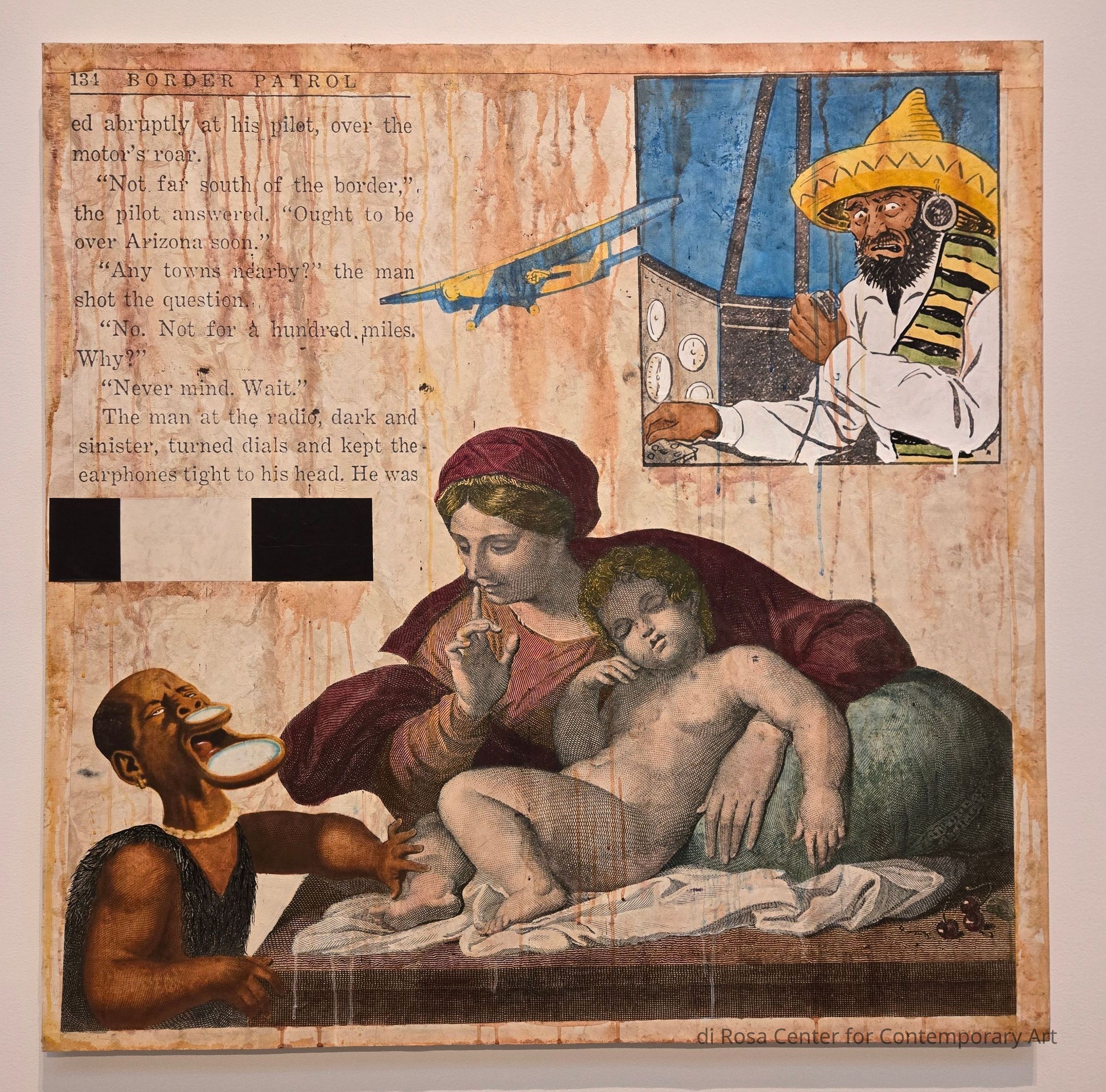
Border patrol text in upper left with black and white boxes beneath, plane in middle with pilot figure in upper right, Mary and child figure in middle
2048
Acrylic and water based oil on ink jet on amate paper, mounted on linen
Work on Paper
AR2048
Anglim/Trimble
Purchase
Enrique Chagoya
2002
Object
48 in
48 in
1-1/2 in
The Incorrect Museum - Ongoing
May 3, 2025 - December 9, 2025, di Rosa Center for Contemporary Art, Napa
The Incorrect Museum: Vignettes from the di Rosa Collection
April 17, 2021- April 17, 2022, di Rosa Center for Contemporary Art, Napa
Be Not Still: Living in Uncertain Times (Part 1)
January 23 - May 27, 2018, di Rosa Center for Contemporary Art, Napa
In his works on canvas and amate (a bark paper indigenous to Mexico), Enrique Chagoya (b. 1953) layers imagery from art history, mass media, and his Mexican Heritage to comment on the politics of representation within art and culture. Both of these works address issues of cultural identity and how identity is established: What is a real American? Who is a real Mexican? Calling on a mixture of political and religious references, symbolic characters carry out scenes related to citizenship, immigration, and xenophobia, creating a direct connection to Ala Ebtekar’s nearby installation. Chagoya’s charged tableaus present multiple angle through which to consider how a body politic is created, defined, and communicated.