
Untitled
Painting
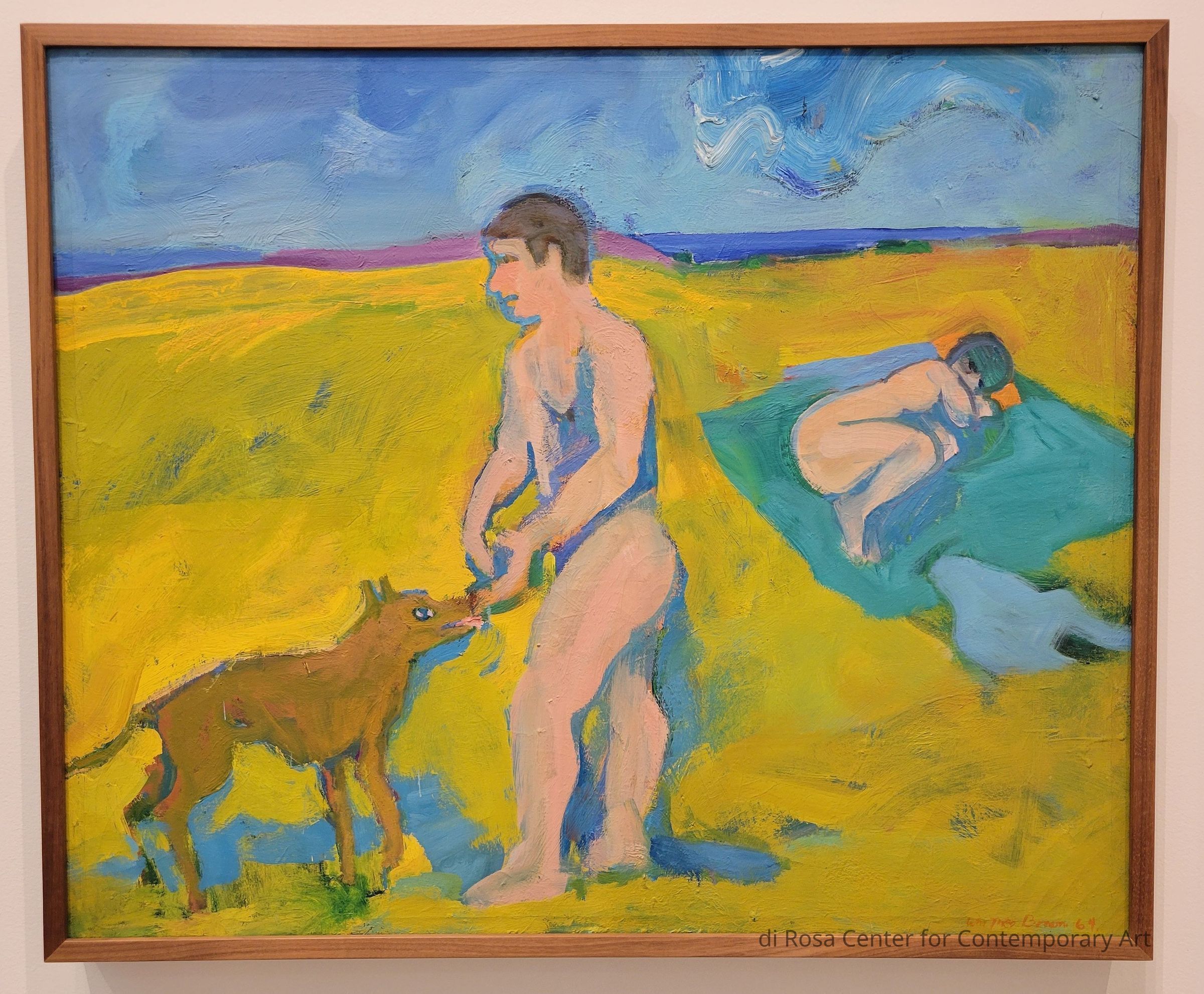
Beach scene of man and woman with dog
466
Oil on Canvas
Painting
AR466
Christie's
Purchase
William Theophilus Brown
1964
Signature
Date
Recto, lower right Verso, upper left
Recto: Wm Theo Brown '64 Verso: Wm. Theo Brown 1964
Painted
Frame
32-1/4 in
38-3/4 in
Object
31 in
37-1/2 in
The Incorrect Museum: Redux
May 13, 2022 - February 26, 2023, di Rosa Center for Contemporary Art, Napa
Building A Different Model: Selections from the di Rosa Collection
March 9 - December 29, 2019, di Rosa Center for Contemporary Art, Napa
The Collection in Context: Bay Area Figurative Art
July 8 – September 26, 2006, di Rosa Preserve
Curator
2022
Brown was a key member of the Bay Area Figurative Movement–a group of painters including Richard Diebenkorn, David Park, Elmer Bischoff and James Weeks –who embraced figurative representation with depictions of both natural and human forms. Following the well-received 1957 exhibition Contemporary Bay Area Figurative Painting at the Oakland Museum of Art, the figurative movement became perhaps the best-known school to emerge from the Bay Area in the twentieth century. Although they rejected pure abstraction, Brown and his colleagues employed painterly strategies associated with the San Francisco school of abstract expressionism (a palate of muted earth tones, broad planes of color and a sludgy use of impasto which lent a textured, sculptural quality to their surfaces).