
Six Pack
Sculpture
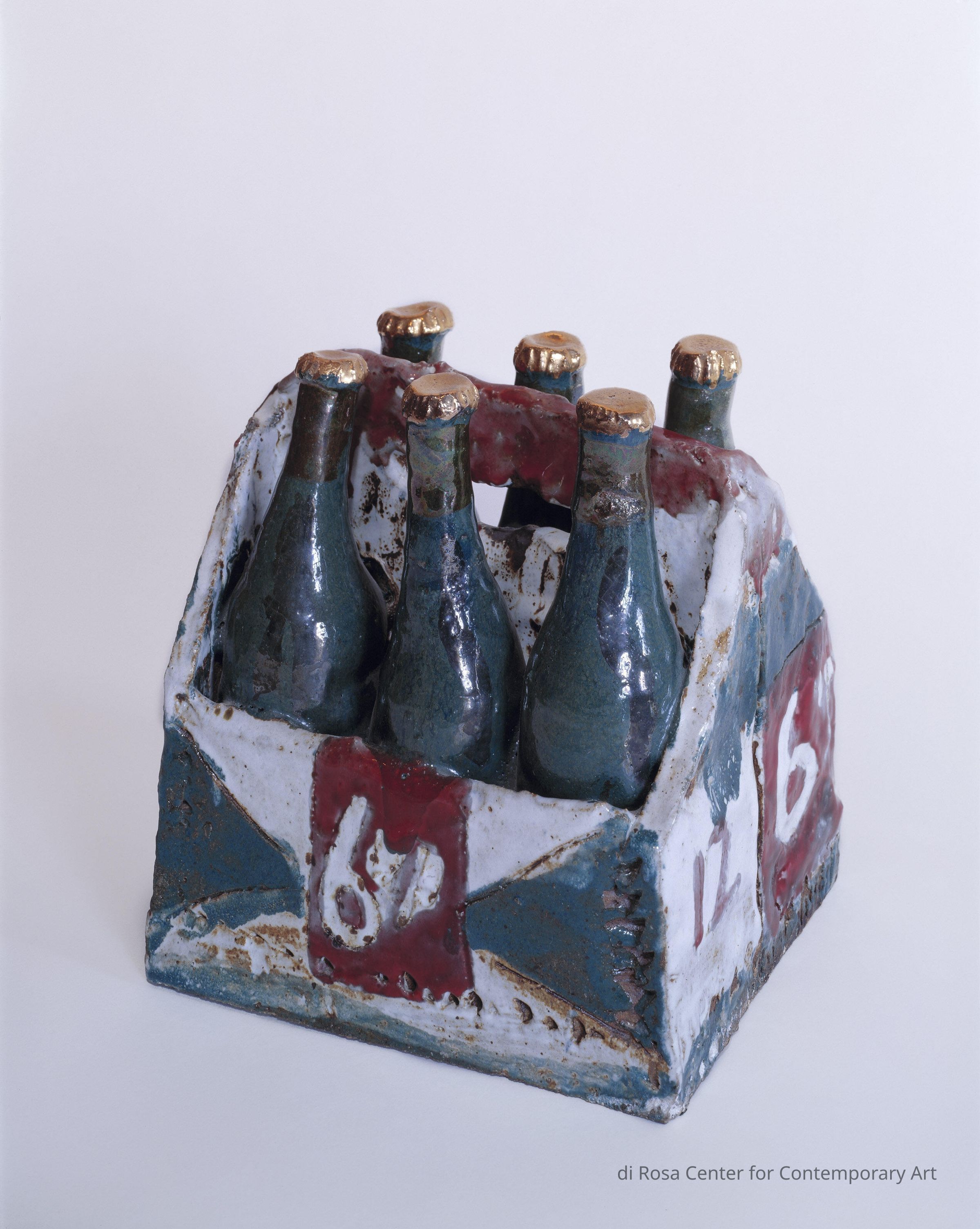
Ceramic six pack of green bottles with gold caps
72
Glazed ceramic
Sculpture
AR72
Hansen Gallery
Purchase
Robert Carston Arneson
1964
Object
10 in
9-1/4 in
6-1/2 in
The Incorrect Museum: Redux
Robert Arneson Retropsective
The Not-So-Still Life
A Happening Place
Building A Different Model: Selections from the di Rosa Collection
-Building a Different Model: Selection from the di Rosa Collection, Guest Curator, Dan Nadel, Di Rosa Center for Contemporary Art, Napa, CA, March 9 - December 30, 2019. -Collections in Context: Bay Area Ceramic Sculpture
Curator
2019
In the early 1960s Robert Arneson began to play with vernacular forms, producing for instance a prescient 1961 sculpture No Deposit, No Return, a capped bottle bearing that inscription. This was just a year after Jasper Johns’s Ale Cans (1960) was first exhibited. Because Ale Cans remained unpublished in art magazines until 1964, Arneson would not have seen it until then, but as he would throughout his career, he caught the zeitgeist. Of the new objects he attempted in the ensuing few years, among the most successful was this detailed Six Pack. Arneson called this and other related works “not really Pop, because they’re much more romantic, and they’re dealing with the touch.” Moreover, the caps are all on—this is work ready to be touched and imbibed.