
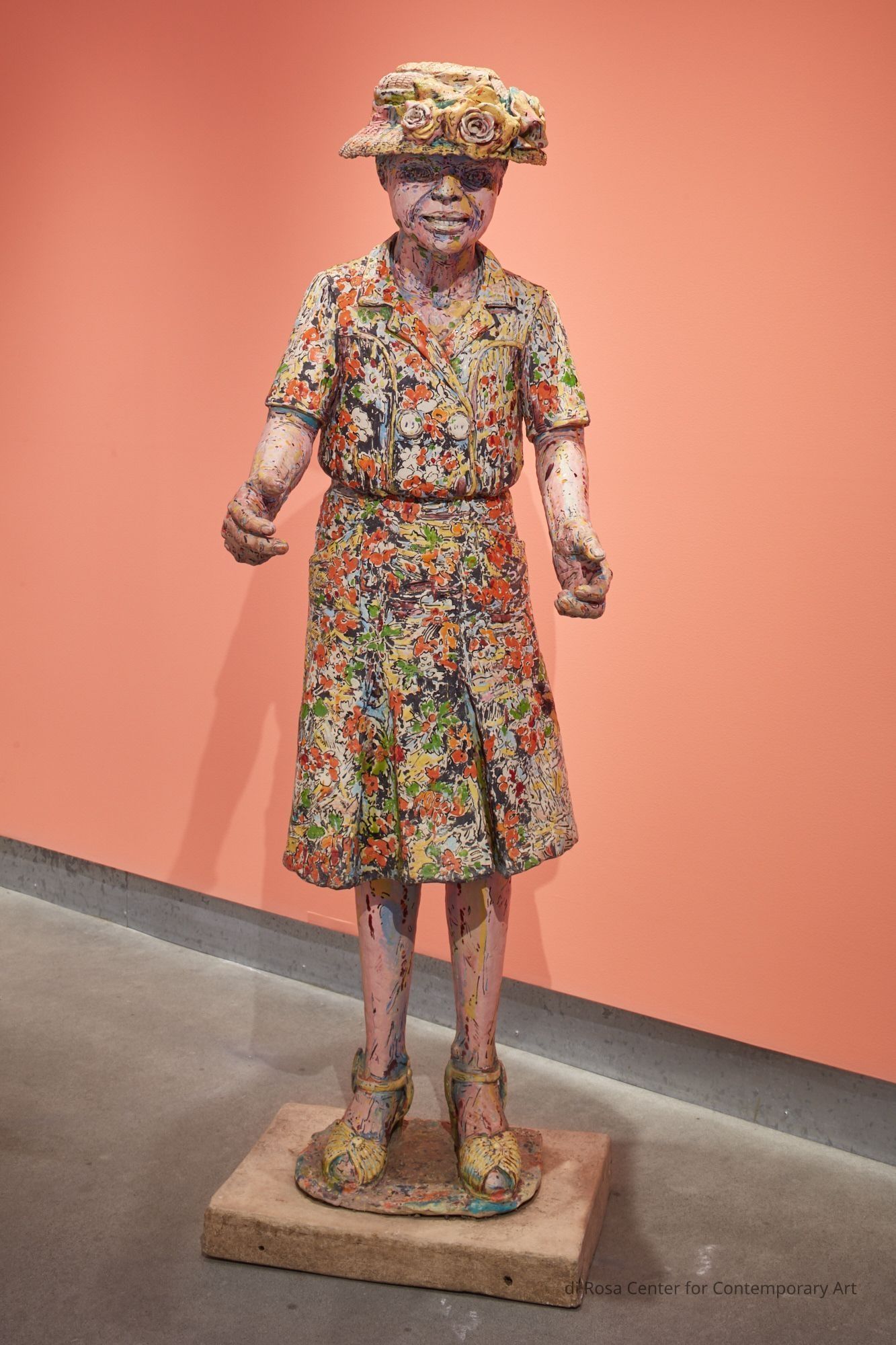
Untitled (Grandmother Series)
Sculpture
Grandmother stands in Sunday best print dress and flowered hat with high heeled shoes and arms outstretched in greeting
676
ceramic and glazes
Sculpture
AR676
Braunstein/Quay Gallery
Purchase
Viola Frey
1978
Object
75 in
27 in
28-1/2 in
Viola Frey: Foundations
January 10 - April 5, 2026, Bedford Gallery, Walnut Creek
To the Max!
September 8, 2023 - August 24, 2024, di Rosa Center for Contemporary Art, Napa
Viola Frey: Center Stage
February 23 - December 28, 2019, di Rosa Center for Contemporary Art, Napa
Be Not Still: Living in Uncertain Times (Part 2)
June 23, 2018 - December 30, 2018, di Rosa Center for Contemporary Art, Napa
Curator
2019
Untitled (Grandmother Series) depicts a stately older woman wearing a floral dress, a Sunday hat, and a mild grimace. The agrarian culture of Lodi, California, where Frey was raised, may have been male-dominated, but representations of powerful older women became a prevalent theme throughout much of her sculpture. The several influences for this work include Frey’s paternal grandmother, the willful leader of their family, as well as other resilient women who stewarded Lodi through World War II. The third notable reference is Mrs. Elsie Grosvenor, a writer, suffragette, world traveler, and wife of the editor of National Geographic (Grosvenor’s powerful image in the pages of the magazine made an impression on Frey as a child). These strong characterizations are in direct opposition to the frail, vulnerable depictions of older women we often encounter in the media and popular culture. By portraying such an unconventional and often overlooked subject, this work troubles the neglect and erasure experienced by older women as subjects in art and the media.